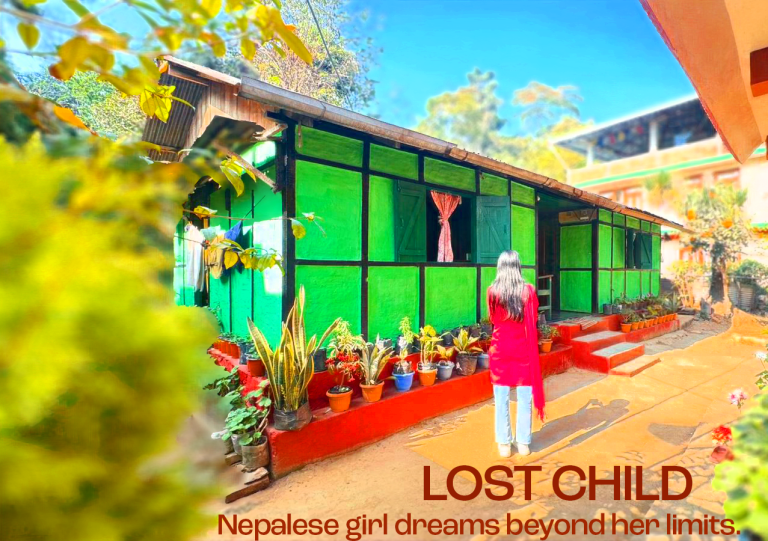
A Little Girl from a poor village in Nepal dreams big but the odds are stacked against her. Her desire for an education and escape are not within reach but can her tenacity get her out of her small minded community?
Anamika, known for much of her life simply as The Little Girl, stands in a prestigious Fitzrovia art gallery in London, celebrated for her evocative work. As she prepares to give an opening speech, a familiar face from her past, Karma, resurfaces, triggering memories too emotional to voice aloud. Her journey unfolds in flashback: born in a Nepalese village, orphaned by her mother’s death and abandoned by her father, she is raised by abusive grandparents. Forbidden formal education as a girl, she infiltrates a boys’ school by posing as a boy with the help of her neighbor Bina. When her identity is exposed, she is transferred to a convent school for girls, where an inspiring British art teacher, Margaret, recognizes her artistic gift, though bullying, favoritism, and systemic injustice almost crush her creative spirit.
After suffering betrayal by her estranged father, the death of her grandmother, and increasing emotional isolation, Anamika nearly gives up art entirely. Margaret returns, guiding her toward healing by involving her in teaching art therapy at an orphanage. Gradually, Anamika’s passion reignites, leading to the public sale of her work at a local event. Without her knowledge, Margaret applies for a London scholarship on her behalf, which Anamika reluctantly accepts, leaving behind her village and painful past. In London, she struggles to adapt to urban life, cultural differences, and prejudice, but with the support of her new friend Alice, she matures, hones her craft, and ultimately wins top honors in her graduating exhibition. Her unique artistic voice draws the attention of an esteemed gallery.
Returning to the opening scene, now fully in her power, Anamika introduces herself by name for the first time, “the girl with no name” who has finally defined her own identity. Rejecting the exploitative gallery owner, she chooses a purpose beyond fame: to travel, teach, and uplift underprivileged children, just as Margaret once did for her. In walking away from the glittering world that idolizes her talent but not her truth, Anamika embraces her calling, not just as an artist, but as a mentor, and perhaps the one to uncover the next unheard voice.